Academic Tutorials


English | French | Portugese | German | Italian
Google

Home Source Codes E-Books Downloads Contact Us About Us

TCP/IP Tutorial
TCP/IP Introduction
TCP/IP Addressing
TCP/IP Protocols
What is TCP/IP ?
HTTP and HTTPS protocols
MIME and IMAP protocols
SSL and SMTP protocols
POP and FTP protocols
NTP and DHCP protocols
SNMP and LDAP protocols
ICMP and ARP protocols
RARP,BOOTP and PPTP protocols
TCP/IP email

HTML Tutorials
HTML Tutorial
XHTML Tutorial
CSS Tutorial
TCP/IP Tutorial
XML Tutorials
XML Tutorial
XSL Tutorial
XSLT Tutorial
DTD Tutorial
Schema Tutorial
XForms Tutorial
XSL-FO Tutorial
XML DOM Tutorial
XLink Tutorial
XQuery Tutorial
XPath Tutorial
XPointer Tutorial
RDF Tutorial
SOAP Tutorial
WSDL Tutorial
RSS Tutorial
WAP Tutorial
Web Services Tutorial
Browser Scripting
JavaScript Tutorial
VBScript Tutorial
AJAX Tutorial
DHTML Tutorial
HTML DOM Tutorial
WMLScript Tutorial
E4X Tutorial
Server Scripting
ASP Tutorial
PHP Tutorial
PERL Tutorial
SQL Tutorial
ADO Tutorial
.NET (dotnet)
Microsoft.Net
XML Web Services
ASP.Net
.Net Mobile
C# : C Sharp
ADO.NET
VB.NET
Multimedia
SVG Tutorial
Flash Tutorial
Media Tutorial
SMIL Tutorial
Web Building
Web Browsers
Web Hosting
W3C Tutorial
Web Building
Web Quality
Web Semantic
Web Careers
Java Tutorials
Java Tutorial
JSP Tutorial
Servlets Tutorial
Struts Tutorial
EJB Tutorial
JMS Tutorial
JMX Tutorial
Programming Langauges
C Tutorial
C++ Tutorial
Visual Basic Tutorial
Data Structures Using C
Soft Skills
Communication Skills
Time Management
Project Management
Team Work
Leadership Skills
Corporate Communication
Negotiation Skills


ICMP and ARP protocols
Previous Next


  • ICMP is Internet Control Message Protocol.


  • ICMP is a complementary protocol to IP (Internet Protocol) and like IP, ICMP resides on the Network Layer of the OSI Model.


  • ICMP is designed for test messages and sending control across IP networks.


  • Unlike the Transport Layer protocols UDP (User Datagram Protocol) and TCP (Transmission Control Protocol) which operate on top of IP, ICMP exists alongside IP.


  • The ability to understand ICMP is a requirement for any IP-compatible network device and however, many security devices such as firewalls block or disable all or part of ICMP functionality for security purposes.


ICMP Message Types

The most common ICMP message types are given in the following table:

Type Name
0 Echo Reply
3 Destination Unreachable
4 Source Quench
5 Redirect
6 Alternate Host Address
8 Echo
9 Router Advertisement
10 Router Solicitation
11 Time Exceeded
12 Parameter Problem
13 Timestamp
14 Timestamp Reply
15 Information Request
16 Information Reply
17 Address Mask Request
18 Address Mask Reply
30 Traceroute


ARP

The address resolution protocol (arp) is a protocol used by the Internet Protocol (IP) [RFC826] and specifically IPv4, to map IP network addresses to the hardware addresses used by a data link protocol. The protocol operates below the network layer as a part of the interface between the OSI network and OSI link layer and it is used when IPv4 is used over Ethernet.

The term address resolution refers to the process of finding an address of a computer in a network and the address is "resolved" using a protocol in which a piece of information is sent by a client process executing on the local computer to a server process executing on a remote computer and the information received by the server allows the server to uniquely identify the network system for which the address was required and therefore to provide the required address. The address resolution procedure is completed when the client receives a response from server containing the required address.


Types of Message Sent by ARP

There are four types of arp messages that may be sent by the arp protocol and these are identified by four values in the "operation" field of an arp message. The types of message are:

  1. ARP request
  2. ARP reply
  3. RARP request
  4. RARP reply

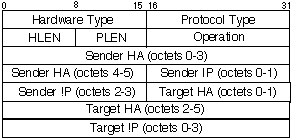
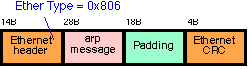
The format of an arp message is shown below:

To reduce the number of address resolution requests, a client normally caches resolved addresses for a (short) period of time and the arp cache is of a finite size, and would become full of incomplete and obsolete entries for computers that are not in use if it was allowed to grow without check. The arp cache is therefore periodically flushed of all entries. This deletes and unused entries frees space in the cache and it also removes any unsuccessful attempts to contact computers which are not currently running.


Example of use of the Address Resolution Protocol (arp)

The figure below shows the use of arp when a computer tries to contact a remote computer on the same LAN (known as "sysa") using the "ping" program and it is assumed that no previous IP datagrams have been received form this computer, and therefore arp must first be used to identify the MAC address of the remote computer.


Share And Enjoy:These icons link to social bookmarking sites where readers can share and discover new web pages.
  • blinkbits
  • BlinkList
  • blogmarks
  • co.mments
  • connotea
  • del.icio.us
  • De.lirio.us
  • digg
  • Fark
  • feedmelinks
  • Furl
  • LinkaGoGo
  • Ma.gnolia
  • NewsVine
  • Netvouz
  • RawSugar
  • Reddit
  • scuttle
  • Shadows
  • Simpy
  • Smarking
  • Spurl
  • TailRank
  • Wists
  • YahooMyWeb

Previous Next

Keywords: icmp packet size, icmp header, icmp rfc, icmp format, arp rfc, arp header, arp format, ethernet protocols, arp packet, arp port, icmp port, arp network, ip protocols, icmp checksum


HTML Quizes
HTML Quiz
XHTML Quiz
CSS Quiz
TCP/IP Quiz
XML Quizes
XML Quiz
XSL Quiz
XSLT Quiz
DTD Quiz
Schema Quiz
XForms Quiz
XSL-FO Quiz
XML DOM Quiz
XLink Quiz
XQuery Quiz
XPath Quiz
XPointer Quiz
RDF Quiz
SOAP Quiz
WSDL Quiz
RSS Quiz
WAP Quiz
Web Services Quiz
Browser Scripting Quizes
JavaScript Quiz
VBScript Quiz
AJAX Quiz
DHTML Quiz
HTML DOM Quiz
WMLScript Quiz
E4X Quiz
Server Scripting Quizes
ASP Quiz
PHP Quiz
PERL Quiz
SQL Quiz
ADO Quiz
.NET (dotnet) Quizes
Microsoft.Net Quiz
XML Web Services Quiz
ASP.Net Quiz
.Net Mobile Quiz
C# : C Sharp Quiz
ADO.NET Quiz
VB.NET Quiz
Multimedia Quizes
SVG Quiz
Flash Quiz
Media Quiz
SMIL Quiz
Web Building  Quizes
Web Browsers Quiz
Web Hosting Quiz
W3C Quiz
Web Building Quiz
Web Quality Quiz
Web Semantic Quiz
Web Careers Quiz
Java Quizes
Java Quiz
JSP Quiz
Servlets Quiz
Struts Quiz
EJB Quiz
JMS Quiz
JMX Quiz
Programming Langauges Quizes
C Quiz
C++ Quiz
Visual Basic Quiz
Data Structures Using C Quiz
Soft Skills Quizes
Communication Skills Quiz
Time Management Quiz
Project Management Quiz
Team Work Quiz
Leadership Skills Quiz
Corporate Communication Quiz
Negotiation Skills Quiz

Privacy Policy
Copyright © 2003-2008 Vyom Technosoft Pvt. Ltd., All Rights Reserved.