Academic Tutorials


English | French | Portugese | German | Italian
Google

Home Source Codes E-Books Downloads Contact Us About Us

Data Structures Using C
Introduction to Data Structures
Pointers and Indirection
Linear Data Structures
Stacks: The Abstract View
Queues: The Abstract View
Introduction to Trees
Introduction to Graphs

HTML Tutorials
HTML Tutorial
XHTML Tutorial
CSS Tutorial
TCP/IP Tutorial
XML Tutorials
XML Tutorial
XSL Tutorial
XSLT Tutorial
DTD Tutorial
Schema Tutorial
XForms Tutorial
XSL-FO Tutorial
XML DOM Tutorial
XLink Tutorial
XQuery Tutorial
XPath Tutorial
XPointer Tutorial
RDF Tutorial
SOAP Tutorial
WSDL Tutorial
RSS Tutorial
WAP Tutorial
Web Services Tutorial
Browser Scripting
JavaScript Tutorial
VBScript Tutorial
AJAX Tutorial
DHTML Tutorial
HTML DOM Tutorial
WMLScript Tutorial
E4X Tutorial
Server Scripting
ASP Tutorial
PHP Tutorial
PERL Tutorial
SQL Tutorial
ADO Tutorial
.NET (dotnet)
Microsoft.Net
XML Web Services
ASP.Net
.Net Mobile
C# : C Sharp
ADO.NET
VB.NET
Multimedia
SVG Tutorial
Flash Tutorial
Media Tutorial
SMIL Tutorial
Web Building
Web Browsers
Web Hosting
W3C Tutorial
Web Building
Web Quality
Web Semantic
Web Careers
Java Tutorials
Java Tutorial
JSP Tutorial
Servlets Tutorial
Struts Tutorial
EJB Tutorial
JMS Tutorial
JMX Tutorial
Programming Langauges
C Tutorial
C++ Tutorial
Visual Basic Tutorial
Data Structures Using C
Soft Skills
Communication Skills
Time Management
Project Management
Team Work
Leadership Skills
Corporate Communication
Negotiation Skills


Stacks: The Abstract View

Previous Next


Linear Data Structures

Stack is the other common linear data structure which is been used now a days. Just like we did with the ordered list, we will examine the abstract view of the stack first and then look at the couple of ways a stack can be implemented. Stack is very similar to a list except that a stack is more restricted. The figure below should give you an good idea of the abstract view of what stack is. Follow the directions to manipulate the simple stack and learn about the operations that the stack provides.
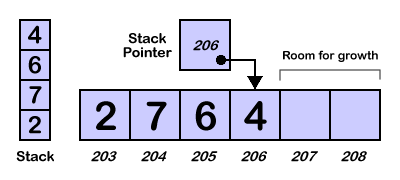


By seing the figure above you can see that this data structure is really a restricted list. You have restricted the access to one end of the list by using the pop and push operations. The result of this restriction is that items in the list will be stored one on top of the other. We must first remove all the items above it till you get to the bottom item. "Last-In, First-Out" or LIFO, which is used to describe the behavior, since the last item to enter the stack is the first item to leave the stack. The top item is the item always the last item to enter the stack and it is always the first item to leave the stack since no other items can be removed until the top item is removed.

PushStackItem(Stack, Item)
Item PopStackItem(Stack)

The PushStackItem operation has two parameters which are, the stack and an item. This operation adds the item to the top of the specified stack, the item and the stack which is specified in the above function. The PopStackItem operation only takes one parameter which is a stack(stack name). However, notice that this operation has the keyword Item listed to the left of the PopStackItem keyword. This keyword is used to represents the item that is removed from the top of the stack when the PopStackItem operation is done. These two operations(PushStackItem and PopStackItem) are part of the abstract view of the stack.


Pointer Implementation in the Stack

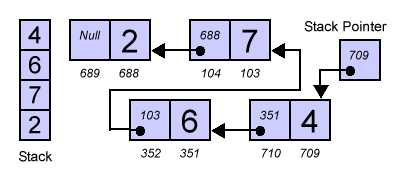
In order to implement a stack using pointers, we need to link nodes together just like we did for the pointer implementation of the list. Each node contains the stack item and the pointer to the next node. We also need a special pointer(stack pointer) to keep track of the top of our stack.


Stack Operations:


push(new-item:item-type)

Adds an item onto the stack.


top():item-type
Returns the last item pushed onto the stack.


pop()
Removes the most-recently-pushed item from the stack.


is-empty():Boolean
True iff no more items can be popped and there is no top item.


is-full():Boolean
True iff no more items can be pushed.


get-size():Integer
Returns the number of elements on the stack.


All operations except get-size() can be performed in O(1) time. get-size() runs in at worst O(N).


Share And Enjoy:These icons link to social bookmarking sites where readers can share and discover new web pages.
  • blinkbits
  • BlinkList
  • blogmarks
  • co.mments
  • connotea
  • del.icio.us
  • De.lirio.us
  • digg
  • Fark
  • feedmelinks
  • Furl
  • LinkaGoGo
  • Ma.gnolia
  • NewsVine
  • Netvouz
  • RawSugar
  • Reddit
  • scuttle
  • Shadows
  • Simpy
  • Smarking
  • Spurl
  • TailRank
  • Wists
  • YahooMyWeb

Previous Next

Keywords: abstract art, abstract expression, abstract paintings, abstract artists, abstract painting, Stacks, c++ stacks, deca stacks, bass stacks, java stacks, protocol stacks, marshall stacks, stacks com


HTML Quizes
HTML Quiz
XHTML Quiz
CSS Quiz
TCP/IP Quiz
XML Quizes
XML Quiz
XSL Quiz
XSLT Quiz
DTD Quiz
Schema Quiz
XForms Quiz
XSL-FO Quiz
XML DOM Quiz
XLink Quiz
XQuery Quiz
XPath Quiz
XPointer Quiz
RDF Quiz
SOAP Quiz
WSDL Quiz
RSS Quiz
WAP Quiz
Web Services Quiz
Browser Scripting Quizes
JavaScript Quiz
VBScript Quiz
AJAX Quiz
DHTML Quiz
HTML DOM Quiz
WMLScript Quiz
E4X Quiz
Server Scripting Quizes
ASP Quiz
PHP Quiz
PERL Quiz
SQL Quiz
ADO Quiz
.NET (dotnet) Quizes
Microsoft.Net Quiz
XML Web Services Quiz
ASP.Net Quiz
.Net Mobile Quiz
C# : C Sharp Quiz
ADO.NET Quiz
VB.NET Quiz
Multimedia Quizes
SVG Quiz
Flash Quiz
Media Quiz
SMIL Quiz
Web Building  Quizes
Web Browsers Quiz
Web Hosting Quiz
W3C Quiz
Web Building Quiz
Web Quality Quiz
Web Semantic Quiz
Web Careers Quiz
Java Quizes
Java Quiz
JSP Quiz
Servlets Quiz
Struts Quiz
EJB Quiz
JMS Quiz
JMX Quiz
Programming Langauges Quizes
C Quiz
C++ Quiz
Visual Basic Quiz
Data Structures Using C Quiz
Soft Skills Quizes
Communication Skills Quiz
Time Management Quiz
Project Management Quiz
Team Work Quiz
Leadership Skills Quiz
Corporate Communication Quiz
Negotiation Skills Quiz

Privacy Policy
Copyright © 2003-2008 Vyom Technosoft Pvt. Ltd., All Rights Reserved.